
Driveway Excavation in Bremen Maine
A driveway that lasts starts below the surface. Proper driveway excavation creates the foundation your concrete, asphalt, or paver driveway needs to resist cracking, settling, and drainage problems for years to come. Seamus Gilbert Excavation provides professional driveway preparation services in Bremen Maine for homeowners and contractors who want quality work done right the first time.
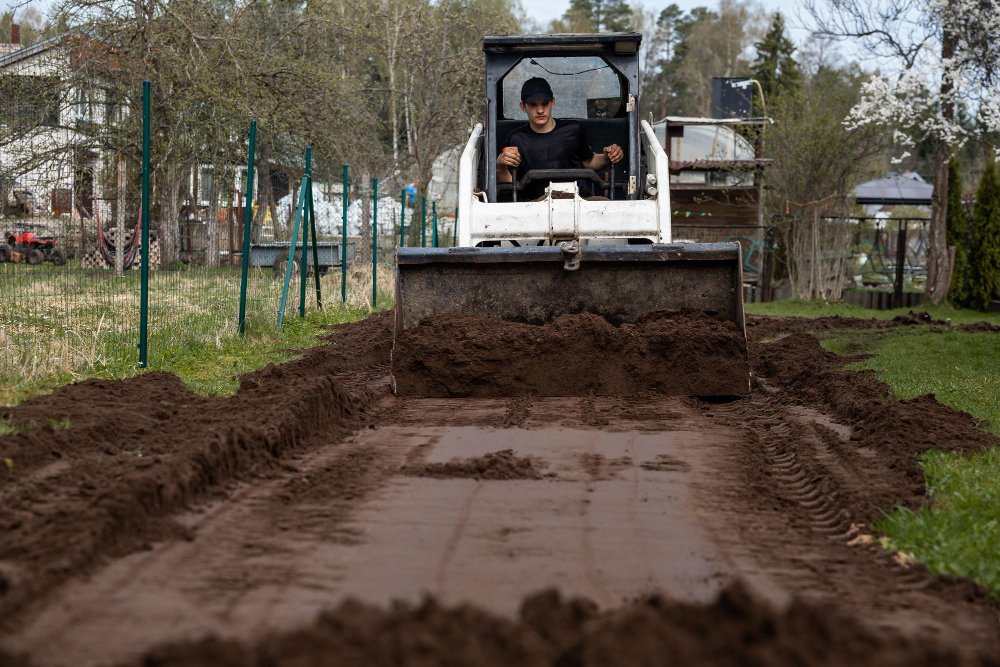
Why Driveway Excavation Matters
Most driveway failures don’t start at the surface—they start underneath. Poor excavation causes cracking and sinking that shows up months or years after installation. Improper grading leads to water pooling against your foundation or ice buildup in winter. A weak base shortens your driveway’s lifespan and leads to expensive repairs.
A properly excavated and compacted base prevents premature cracking, settling, and drainage issues. When we excavate your driveway, we’re not just digging—we’re creating stable ground that supports the weight of vehicles and handles Bremen’s freeze-thaw cycles without shifting or failing.
Whether you’re installing a new driveway, replacing a cracked one, or preparing ground for a contractor, the excavation phase determines how well your finished driveway performs.
Our Driveway Excavation Process
We follow a proven process that ensures your driveway has the proper foundation:
Site Evaluation & Measurements – We assess your property’s slope, drainage patterns, soil conditions, and access points. This helps us plan the proper depth, grading, and any drainage solutions your site needs.
Removal of Existing Driveway – If you’re replacing an old driveway, we carefully remove the existing concrete, asphalt, or pavers and haul away debris. We work close to your home and landscaping with controlled excavation techniques that minimize disruption.
Proper Depth Excavation – We dig to the correct depth based on your driveway type and soil conditions. This typically means removing 12-18 inches of material to allow for proper base installation and finished surface height.
Grading & Slope for Drainage – Proper slope is critical. We grade your driveway to direct water away from your home, garage, and foundation. This prevents ice dams in winter and keeps water from pooling where it causes damage.
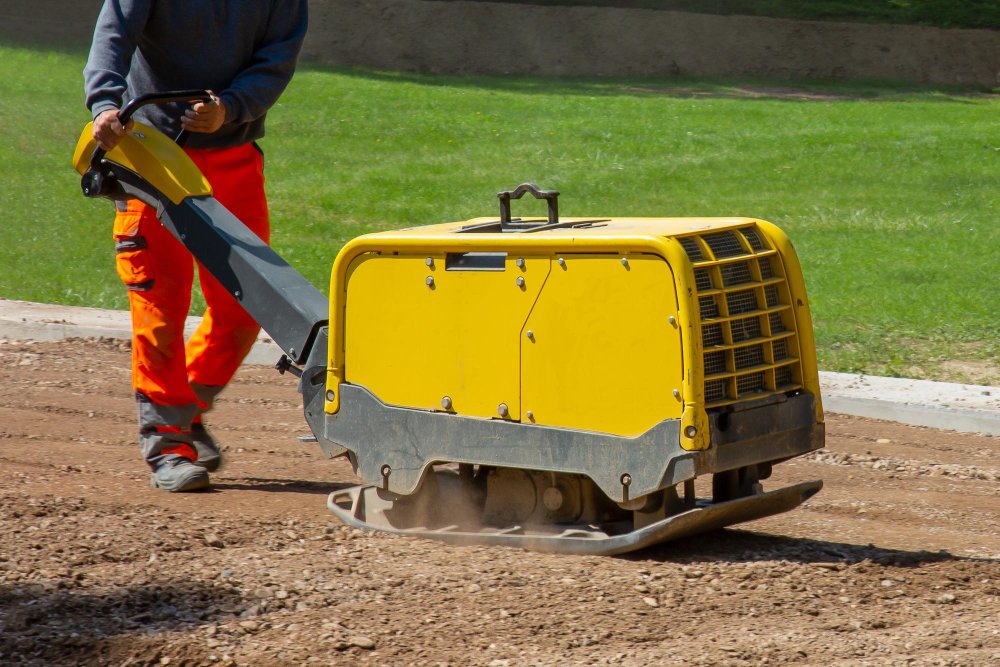
Base Preparation & Compaction – We install and compact gravel base material in layers, creating a stable platform that won’t shift under vehicle weight. Proper compaction is what separates driveways that last from those that fail early.
Driveway Excavation Contractors in Bremen Maine You Can Trust
Choosing the right driveway excavation contractors in Bremen Maine means finding someone who understands local conditions and takes pride in doing thorough work. Bremen’s coastal location brings specific challenges—clay soils that hold water, seasonal freeze-thaw cycles, and varying terrain from waterfront properties to inland lots.
We know these conditions because we work here. Our equipment handles everything from tight residential driveways to longer rural approaches. We locate utilities before digging, protect your landscaping during work, and leave your property clean when we’re done.
Driveway Types We Support
Different driveway surfaces need different preparation. We provide excavation for all common driveway types:
Concrete Driveway Excavation – Concrete requires excellent base preparation and precise grading. We excavate to proper depth, ensure adequate drainage, and create the stable base concrete needs to cure without cracking.
Asphalt Driveway Excavation – Asphalt performs best over well-compacted gravel base. We prepare the subgrade, install base layers, and create proper crown or slope for water runoff.
Paver Driveway Excavation – Pavers need careful depth control and edge preparation. We excavate to allow for sand bedding and paver thickness while maintaining proper height relative to garage floors and sidewalks.
Gravel Driveway Preparation – Even gravel driveways benefit from proper excavation. We remove unsuitable soil, grade for drainage, and prepare the base so gravel stays in place rather than rutting or washing away.
We handle residential driveways of all sizes and light commercial driveway work for small businesses and rental properties.
Drainage & Water Control
Water is your driveway’s biggest enemy. Without proper drainage, water undermines the base, creates frost heaving in winter, and causes settling that leads to cracks and sunken sections.
Our driveway preparation services in Bremen Maine always address drainage:
Proper Slope Away from Home – We grade so water flows away from your foundation, typically using a 2% slope. This keeps water from pooling against basement walls or garage floors.
Preventing Water Pooling – Low spots collect water that freezes and expands in winter. We eliminate these areas through careful grading and base preparation.
Drainage Solutions Where Needed – Some properties need additional help—catch basins, culverts, or drainage swales. We identify these needs during site evaluation and incorporate solutions into the excavation plan.
Bremen’s weather patterns mean your driveway will face rain, snow melt, and freeze-thaw cycles. Proper drainage planning during excavation protects your investment year-round.
When Do You Need Driveway Excavation?
Several situations call for professional driveway excavation near Bremen Maine:
New Driveway Installation – Building a new home or adding a driveway where none exists requires complete excavation and base preparation.
Replacing Cracked or Sunken Driveways – When your existing driveway has failed, proper excavation fixes the underlying problems so replacement lasts longer than the original.
Driveway Widening or Extension – Expanding your driveway means excavating new areas and matching them to existing grades and drainage patterns.
Drainage Issues Around the Driveway – If water pools on or near your driveway, regrading through excavation may be the solution.
Preparing for Concrete or Asphalt Resurfacing – Even overlay projects sometimes need excavation work to correct drainage or remove failed sections before new surface goes down.

Working With Your Contractor or Installing Yourself
Many homeowners hire separate companies for excavation and final surface installation. We work smoothly with concrete contractors, asphalt companies, and paver installers throughout the Bremen area. We communicate directly with your surface contractor about depth, grade, and timing so your project flows efficiently.
If you’re installing your own gravel driveway or hiring different trades, we provide the prepared base and can coordinate our work with your schedule.
Local Knowledge Makes a Difference
As an experienced driveway excavation company in Bremen Maine, we understand how local soil behaves. Coastal clay soils hold moisture and require good drainage design. Rocky areas need different approaches than sandy soils. Properties near the water face different challenges than inland lots.
We’ve worked throughout Bremen and know what to expect. This experience means fewer surprises, accurate estimates, and excavation that’s properly planned for your specific property conditions.
Safe, Controlled Excavation
Driveway work happens close to your home, landscaping, and utilities. We take precautions that protect your property:
Utility Locating – We call Dig Safe before excavating and mark all underground utilities. This prevents damage to electric, water, gas, and cable lines.
Controlled Excavation Near Structures – We work carefully near foundations, walls, sidewalks, and landscaping features. Our operators have the skill to excavate tight areas without collateral damage.
Clean Site Management – We keep work areas organized, protect lawns with equipment mats when needed, and clean up thoroughly when finished.
Quality Excavation, Lasting Results
A well-excavated driveway base does its job quietly for decades. Poor excavation shows up as cracks, settling, drainage problems, and premature failure. The difference is in the details—proper depth, correct slope, thorough compaction, and drainage planning.
We’ve built our reputation on doing this detail work right. When you choose Seamus Gilbert Excavation for your driveway project, you’re getting experienced operators, proper equipment, and commitment to quality that shows in how well your finished driveway performs.
Ready to Start Your Driveway Project?
Whether you’re planning a new driveway, replacing an old one, or preparing ground for a contractor, let’s discuss your project. Contact Seamus Gilbert Excavation for a site evaluation and detailed estimate.
Call us today to schedule your driveway excavation consultation.
Seamus Gilbert Excavation – Professional driveway excavation in Bremen Maine for homeowners and contractors who expect quality results.
Frequently Asked Questions (FAQS)
1. How deep should a driveway be excavated?
Standard driveway excavation depth is 12-18 inches total, allowing for 8-12 inches of compacted gravel base plus the finished surface thickness. Concrete driveways typically need 12-14 inches of excavation, asphalt needs 14-16 inches, and pavers require 16-18 inches including sand bedding layer.
- Why does excavation depth matter for driveways? Proper depth ensures adequate base material for load support, prevents frost heaving in winter, allows for proper drainage layers, maintains correct height relative to garage floors and sidewalks, and provides long-term stability that prevents cracking and settling.
- What happens if a driveway isn’t excavated deep enough? Shallow excavation leads to inadequate base support causing premature cracking, settling and sinking under vehicle weight, frost heaving during freeze-thaw cycles, poor drainage leading to water damage, and significantly shortened driveway lifespan requiring early replacement.
- Can you excavate too deep for a driveway? Excessive depth wastes money on unnecessary base material and creates height mismatches with garage entrances or street connections. However, slightly deeper excavation is better than too shallow, especially in areas with poor native soil that needs more base support.
- Does soil type affect excavation depth? Yes, clay soils that hold water may need deeper excavation and more base material for stability. Rocky or sandy soils with good drainage may perform adequately with standard depths. Poor soils sometimes require removing extra material and replacing with engineered fill.
2. How long does driveway excavation take?
A typical residential driveway excavation takes 1-3 days depending on size and complexity. Simple replacements on accessible properties may be completed in one day, while new driveways requiring significant grading, drainage work, or difficult access may take 3-5 days including base installation and compaction.
- What can delay a driveway excavation project? Common delays include weather (rain makes soil unworkable), unexpected rock or ledge requiring special equipment, utility conflicts not shown on plans, poor soil requiring additional excavation and fill, equipment breakdowns, and permit or inspection requirements.
- Can driveway excavation be done in winter in Maine? Winter excavation is difficult in Maine due to frozen ground, snow cover, and inability to properly compact base materials in freezing temperatures. Most driveway work happens April through November when ground conditions allow proper excavation and compaction.
- How soon can pavement be installed after excavation? Base material should be compacted and allowed to settle for at least 2-3 days before concrete or asphalt installation. Some contractors prefer waiting a week, especially after significant rain. Proper settling time prevents future driveway movement and cracking.
Do I need to stay home during driveway excavation? Not necessarily, but initial site review requires your presence to discuss access, drainage preferences, and final grade locations. During active excavation, you may want to be available for questions, though experienced contractors can usually work independently once the plan is established.
3. What drainage slope should a driveway have?
Driveways should slope at minimum 2% (1/4 inch per foot) away from buildings to direct water runoff properly. Steeper slopes of 3-5% work better for faster drainage but remain comfortable for walking and driving. Cross-slope or crown can also be used to move water toward edges.
- Which direction should my driveway slope? Driveways should always slope away from your house, garage, and foundation to prevent water from flowing toward structures. Water should be directed toward the street, drainage swales, or designated drainage areas on your property based on natural terrain and existing drainage patterns.
- What if my house is lower than the street? Downhill driveways require careful drainage planning including catch basins, drainage channels, or swales at the bottom to intercept water before it reaches the garage. Some properties need trench drains across the garage entrance to prevent water entry during heavy rain.
- Can a driveway be too steep? Yes, slopes over 15% create traction problems in winter, difficulty for low-clearance vehicles, and safety concerns. Very steep driveways may need switchbacks, special surface treatments for traction, or alternative access design to be practical year-round.
- How do you prevent water from pooling on a driveway? Proper grading during excavation eliminates low spots where water collects. Creating consistent slope toward drainage points, adding crown or cross-slope for wide driveways, and installing catch basins or drainage channels in problem areas keeps surfaces dry and prevents ice formation.
4. Do I need permits for driveway excavation in Bremen Maine?
Most driveway work in Bremen requires a driveway entrance permit, especially if work affects the town right-of-way or roadside drainage. Properties near wetlands may need DEP permits. Contact Bremen’s code enforcement office before starting to determine specific permit requirements for your project.
- What happens if I excavate a driveway without a permit? Working without required permits can result in stop-work orders, fines, required restoration of unpermitted work, and complications when selling your property. If work affects town infrastructure or drainage without approval, you may be liable for damages and required corrections.
- How long does it take to get a driveway permit in Bremen? Simple driveway permits may be approved in 1-2 weeks if application is complete and meets requirements. Projects requiring planning board review or affecting environmentally sensitive areas can take several weeks to months depending on complexity and review schedules.
- Who applies for the driveway permit—me or the contractor? Either the property owner or contractor can apply, depending on your agreement. Many excavation contractors handle permit applications as part of their service since they know local requirements and have relationships with code enforcement offices.
5. Should I hire separate companies for excavation and paving?
Many homeowners use different contractors for excavation and final surface installation, which can work well if both companies communicate properly. However, using one company for the complete project provides single-point accountability. The best approach depends on contractor availability, expertise, and project requirements.
- What are the advantages of using separate contractors? You can hire specialists who excel at their specific trade, potentially get better pricing by selecting competitive bids for each phase, maintain flexibility in timing between excavation and paving, and choose the best paving company even if they don’t do excavation work.
- How do I coordinate between excavation and paving contractors? Have both contractors communicate directly about base depth requirements, compaction specifications, grade elevations, and scheduling. The paving contractor should inspect the prepared base before starting their work to confirm it meets their requirements and prevent later disputes.
- What can go wrong with using different contractors? Miscommunication about depth or grade can cause problems, one contractor may blame the other if issues arise, scheduling gaps between phases can delay completion, and warranty questions may be unclear if the driveway fails. Clear written specifications prevent most problems.
- Do paving companies usually have excavation equipment? Many asphalt and concrete companies have basic excavation equipment for driveway prep, but dedicated excavation contractors often have more extensive equipment and experience with complex grading and drainage issues. Smaller paving companies may prefer to subcontract excavation work.
6. How do I maintain a newly excavated driveway base before paving?
Keep the excavated base free of debris, prevent vehicle traffic that could create ruts, ensure proper drainage continues working, and cover or protect the base during extended delays. If the base sits for weeks, light grading before paving may be needed to smooth any weather-related disturbance.
- Can I drive on the excavated base while waiting for paving? Light vehicle traffic on a properly compacted base is generally acceptable for short periods, but heavy vehicles or repeated traffic can create ruts and disturb compaction. Discuss this with your excavation contractor—some bases handle traffic better than others depending on material and compaction quality.
- What if it rains heavily after excavation but before paving? Properly graded and compacted bases should handle rain without major problems if drainage is working correctly. Heavy washout indicates grading or compaction issues that need correction. Minor surface disturbance can usually be smoothed before paving, but significant erosion requires repair.
- How long can an excavated base sit before paving? A well-prepared base can sit for several weeks or even months if protected from heavy traffic and erosion. However, it’s best to pave within 2-4 weeks to avoid weather damage, weed growth, and the need for re-grading. Communicate timing clearly with both contractors.
7. What's the difference between driveway excavation and regular grading?
Driveway excavation involves removing soil to a specific depth, installing engineered base materials, and compacting in layers to create stable support for pavement. Regular grading simply smooths existing surfaces without structural preparation. Proper excavation is essential for long-lasting driveways, while grading alone leads to premature failure.
- Can you just grade over existing ground for a new driveway? No, driveways built directly on native soil without proper excavation and base installation will fail quickly through settling, cracking, and frost heaving. The base layer distributes vehicle weight and prevents ground movement from affecting the surface.
- Why can’t I just add gravel on top of my yard? Surface gravel without excavation and proper base preparation will sink into soft soil, create ruts, wash away during rain, and fail to support pavement weight. Excavation removes unstable topsoil and creates room for properly compacted structural base layers.
- What is base compaction and why does it matter? Compaction uses heavy equipment to compress gravel base material, eliminating air pockets and creating a solid, stable platform. Without proper compaction, base materials shift under load causing the driveway surface to crack and settle. Each base layer should be compacted before adding the next.
- Do all driveways need the same amount of excavation? No, excavation depth varies based on soil conditions, driveway surface type, expected vehicle loads, and climate. Clay soils need more base depth than sandy soils. Concrete driveways have different requirements than asphalt. Heavy equipment access needs deeper bases than passenger car driveways.
8. Why do driveways crack and sink?
Most driveway failures result from poor excavation and base preparation, not surface quality. Common causes include insufficient excavation depth, inadequate base material, poor compaction, improper drainage causing water undermining, frost heaving from trapped moisture, and settling from working on soft soil without proper preparation.
- How does water cause driveway failure? Water trapped under or around driveways softens the base, washes away supporting material, freezes and expands in winter causing heaving, and creates voids that allow settling. Proper excavation includes grading for drainage and base materials that allow water to flow away rather than accumulate.
- What is frost heaving and how does excavation prevent it? Frost heaving occurs when water in soil freezes, expands, and lifts the driveway surface. Proper excavation removes frost-susceptible soils and replaces them with gravel base that drains water away, preventing ice formation. Adequate depth places the driveway base below frost line.
- Can tree roots damage a driveway after installation? Yes, roots from nearby trees can grow under driveways, lifting and cracking the surface. During excavation, contractors should identify problematic trees and install root barriers if needed, or plan driveway location to avoid future root conflicts.
- How long should a properly excavated driveway last? With correct excavation, base preparation, and drainage, concrete driveways can last 25-30+ years, asphalt 15-20 years with periodic sealing, and pavers 20-25+ years. Driveways installed without proper excavation often show problems within 2-5 years regardless of surface quality.